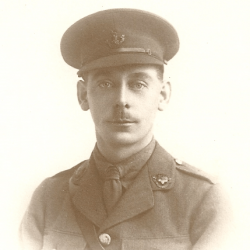
Many books have been written about the 3rd Battle of the Aisne (Chemin des Dames) and there is nothing new added here but this page will provide particular focus on what happened on the first day, May 27, 1918 to the 1/Sherwoods (8th Division) before 9am and to the 9th Loyal North Lancashire Regiment (25th Division) before 6pm.
Operation Bluecher-Yorck, which commenced on May 27, 1918 was the 3rd Operation of the German Spring Offensive (Kaiserschlacht). The German Spring Offensive was “the last of the ebb” and ultimately failed for a number of strategic reasons.
The Germans were ruthlessly well prepared while the Allies laboured under certain operational and political constraints. But tactical brilliance undermined by strategic blunders meant that the Germans won the battle but ultimately lost the war.
The 3rd Battle of the Aisne started with a 3 hour Artillery barrage of unprecedented ferocity and scale consisting of both High Explosive (HE) shells and poison gas. This was immediately followed by overwhelming numbers of elite, battle hardened German storm troops (Sturmtruppen) advancing en-masse still under cover of the early dawn light and thick mist. The German troops advanced rapidly, bypassing any pockets of strong resistance, leaving them to e mopped up by their secondary wave. British Company, Battalion and Brigade HQs were rapidly overrun the consequence of which being that no comprehensive official record exists since papers were unsurprisingly destroyed, lost or captured in the ensuing chaos.
Consequently, the narrative of what exactly happened, certainly before 9am on the 1st day, can only be pieced together from Brigade and Divisional war diary fragments and from individual accounts written much later. One of the best of these accounts is undoubtedly the one published in 1937 by Sidney Rogerson, in ‘The Last of the Ebb’, an excerpt of which was included in the 8th Division war diary. Capt. Rogerson served on the Staff of the 2nd West Yorks, (8th Division).
Pte. Arthur Slater 1/Sherwoods was right in the middle of all that pre-dawn chaos, captured in the Bois de la Miette; a small wood on the Miette stream, situated half-way between the 24th and 25th Infantry Brigade HQs, (the Miette’s course separating the two Brigade sections). Based upon the fact that all three of the 8th Division Brigade HQs were abandoned by 6am we can reasonably conclude that he was captured around about that time. It’s a miracle he was not killed.
2nd Lt. A. E. Downing with the 9th Loyal North Lancashires (9/LNLs) was not caught up in the initial onslaught as the 9/LNLs were in Divisional reserve at Muscourt. The Germans were already crossing the Aisne, at Pontavert (the bridge not being blown), by the time the first group of 9/LNLs were called forward to defend the Canal at Maizy (West of Pontavert). And the German advance troops were already more than a kilometer South of the Aisne by noon when the remainder of the 9/LNLs moved up to meet them. Lt. Downing’s story is wrapped up in the less chaotic tactical retreat that slowed the pace of the German advances, made possible through the re-ordering and the piecemeal reconstitution of smashed Brigades and Divisions that started to take place in the early afternoon of the 1st day, South of the Aisne.
It is remarkable that these two men who did not know each other and had never met would be caught up in the same battle, on the same day, just a few kilometers from each other. One killed in action; the other taken as a Prisoner of War. Eventually being related via marriage when Arthur Slater‘s son married Alfred Edward Downing‘s niece 36 years later.
GERMAN SPRING OFFENSIVE
In March 1918, the Germans launched the Spring Offensive (Kaiserschlacht). Aware that American troops would soon be arriving in Europe, the Germans saw this as their last chance to win the war. If they could overcome the Allied armies and reach Paris, victory might be possible. The German offensive was initially a great success. Striking at the Allied line’s weakest point, the Chemin des Dames, they burst their way through and made quick progress towards the Marne. However, the advance eventually stalled due to supply shortages and lack of reserves. This was to be the ‘last ebb’ of the German war effort.
- Operation Michael March 21, 1918
- Operation Georgette April 9, 1918
- Operation Blucher-Yorck May 27, 1918
Operation Blücher-Yorck was planned primarily by Erich Ludendorff, who was certain that success at the Aisne would lead the German armies to within striking distance of Paris. Ludendorff, who saw the British Expeditionary Force as the main threat, believed that this, in turn, would cause the Allies to move forces from Flanders to help defend the French capital, allowing the Germans to continue their Flanders offensive with greater ease. Thus, the 3rd battle of the Aisne was essentially a large diversionary attack.
Colonel Georg Bruchmüller:
Col. Bruchmüller commanded the German Artillery in Operation Blücher-Yorck. Bruchmüller developed and perfected a system of centralised command so that the batteries could fire, solely off map references, using a program which co-ordinated with movements on the battlefield instead of merely supporting limited troop movements. He devised an intense artillery bombardment which neutralised defences by disorientating or killing the majority of the defenders before the German advance went forward behind a creeping barrage. At the Aisne, the thousands of artillery pieces fired from their maps, in darkness, allowing the infantry to advance at first light into a battered and disoriented defence.
THE ALLIED SITUATION
The defense of the Aisne area was in the hands of General Denis Auguste Duchêne, commander of the French Sixth Army. In addition, four divisions of the British IX Corps, under Lieutenant-General Sir Alexander Hamilton-Gordon, held the Chemin des Dames Ridge; they had been posted there to rest and refit after surviving Operation Michael.
The Allies faced a number of challenges:
Despite British protests, Duchene insisted that the British defensive positions be North of the Aisne because he was unwilling to cede any ground to the Germans due to the heavy French losses incurred to win the ground during the Nivelle Offensive of 1917. The British would have preferred to place their Artillery South of the Aisne and defend in depth.
The positions of the Allied Artillery were well known to Germans because the French had been there a long time and the Germans had many months to accurately locate them.
British troops were tired and depleted. Young, barely trained recruits, with no battle experience, making up the numbers. They were there to rest, refit and properly assimilate the new recruits into their battalions before going back to the front lines.
British troops had been there less than a month and were getting familiar with their new surroundings and generally fixing things to their liking after the long rather leisurely French occupation.
The Allied forces were greatly outnumbered in Artillery and Men. 8 Allied Divisions faced 17 German Divisions and 4,000 guns.
EVENTS OF 27 MAY, 1918
The following narrative is excerpted from (and copyright of) the book 8th Division in War 1914 – 1918, by Lt. Colonel J.H. Boraston & Captain Cyril E.O. Bax which in turn acknowledges that most of the information supplied to the regimental historians for this account (below) came from Captain Sidney Rogerson of the 2nd West Yorkshire Regiment. The section on the Royal Engineers and the Bridges is excerpted from (and copyright of) the History of the Corps of Royal Engineers, Volume V, by Major-General H.L. Pritchard. Sub-headings and annotated maps have been inserted to aid readability and illustrate locations and timing of events.
Yet the feeling of silence persisted. Not a shell came from the enemy, and his quietness removed any lingering doubts as to his intentions.
How that evening dragged. The time crept slowly on towards zero hour till only a few minutes were left…. Suddenly two German Gas shells burst close at hand, punctual heralds of the storm. Within a second, a thousand guns roared out their Iron hurricane. The night was rent with sheets of flame. The earth shuddered under the avalanche of missiles… leapt skywards in dust and tumult. Ever above the din screamed the fierce crescendo of approaching shells, ear splitting crashes as they burst… all the time the dull thud, thud of detonations… drum fire. Inferno raged and whirled round the Bois des Buttes. The dug outs rocked… filled with the acrid fumes of cordite, the sickly sweet tang of gas. Timbers started, earth showered from the roof, men rushed for shelter, seizing kits, weapons, gas masks, message pads as they dived for safety. It was a descent into hell. Crowded with jostling, sweating humanity the dug outs reeked and to make matters worse Headquarters had no sooner got below than gas began to filter down.
Gas masks were hurriedly donned and anti-gas precautions taken- the entrance closed with saturated blankets, braziers lighted on the stairs. If gas could not enter, neither could air. As a fact both did in small quantities and the long night was spent forty feet underground, at the hottest time of the year, in stinking overcrowded holes, their entrances sealed up and charcoal braziers alight drying up the atmosphere – suffocation rendered more complete by the gas mask with clip on nostrils and gag in teeth.
It was one o’clock in the morning of the 27th May, punctual to the predicted time, that the German bombardment was loosed. The whole of IX Corps front and many back areas – railheads, ammunition dumps and the like – were drenched with gas shell. Outpost lines were assailed in addition by trench mortars of every calibre, and the Battle Zone received the terrible bombardment from artillery of all natures which has just been so graphically described. Our artillery positions were also violently attacked with gas shell and H.E. and had area shoots carried out upon them, with the result that by 6am most of our guns North of the river were out of action. A mist which rose into being with the opening of the bombardment, as though evoked at the will of the German Higher Command and in fact accentuated by the enemy’s gas and smoke shells, grew steadily thicker as the night proceeded and made the task of defence additionally difficult. It was indeed, almost uncanny how in this spring of 1918 the luck of the weather favoured the Germans in attack. On each preceding night spent on the new front the weather had been clear and when, for the third time, the troops of the division found their defence hampered by a dense blanket of fog, men and officers began firmly to believe that the enemy had discovered means to put down a mist whenever it was wanted.
The first Infantry attack, assisted by tanks which flattened out the wire, was delivered, it is probable, at about 4 o’clock in the morning, against the angle of the salient in our right sub-sector (25th Infantry Brigade). Owing to the dense mist and to the fact that nearly all units in the Outpost Zone were cut off to a man, it is difficult to reconstruct precisely the sequence of events. It is only at intervals that a clear message comes back out of the chaos and confusion which the fog necessarily produced. Even such a message only serves to emphasize the assistance which the lack of visibility and the exposed position of our troops in the salient gave to the enemy in his attack. Take for instance, the following pigeon message, timed at 5.15am, which was received at Divisional Headquarters at 6.05am: HQ 2nd R.Berks Regt, consisting of Lieut-Col Griffen, Capt Clare, RSM Wokins, Sergt Trinder, Corpl Dobson, Ptes Stone, Gregory, Slee, and QM surrounded. Germans threw bombs down dug outs and pressed on. Appeared to approach from right rear in considerable strength. No idea what has happened elsewhere. Holding out in hopes of relief.
Such hopes were alas in vain.
The attack swept forward, and although our troops resisted stubbornly for a time in the Battle Zone and caused severe losses to the enemy on this line, the defence was overwhelmed by weight of numbers. Brigade HQ had been early involved in the fighting, being practically surrounded before it was known that the front line had gone. It was near here that the brigade major, Captain B.C. Pascoe, M.C., Rifle Brigade, was killed while making a gallant stand. General Husey and what remained of his HQ staff fought their way out and moved back to Gernicourt to organise its defences. At 6.30am General Husey reported to Divisional HQ that he was holding the river line there with the remnants of his brigade. At 7.15am he further reported that all the bridges east of the junction of the Miette and Aisne had been blown up and that he was holding the high ground west of Gernicourt. Later in the morning General Husey, who had only taken command of the brigade front (vice General Coffin, promoted to Divisional Command) on the 7th May, was badly wounded and gassed, and he died a few days after in German hands.
Meanwhile the fortunes or misfortunes of the other two brigades remain to be considered. These two brigades do not appear to have been seriously attacked until about 5am. The front line battalion of the 24th Infantry Brigade (2nd Northamptonshire) was then gradually driven back to the Battle Zone. Tanks do not appear to have been used on this front, but as the light increased enemy aeroplanes were observed flying low over our forward system and firing into the trenches. Colonel Buckle, whose conduct and example had been an inspiration to his men, was killed outside his Battalion HQ, but his battalion fought on and in the Battle Zone in this sector the enemy’s advance was definitely checked. The position here was very strong and repeated attacks were beaten off both by the 2nd Northamptons and 1st Worcestershires.
The last message sent by Colonel Buckle to his front line companies a short time after the German bombardment started, is recorded in tribute to a very gallant officer, and as an example of the spirit in which the defence was made. It ran:
“All Platoon commanders will remain with their platoons and ensure that the trenches are manned immediately the bombardment lifts. Send short situation wire every half hour. No short bombardment can possibly cut our wire and if sentries are alert it cannot be cut by hand. If they try it, shoot the devils. C.G.Buckle, Lieut-Col”
This message was found pinned on the wall of the battalion HQ dug out by Colonel Buckle’s father, who visited the spot after the Armistice. He found his son’s grave close to the entrance, and on each side of the grave a German had been buried. Those who knew Colonel Buckle felt sure he would fight to a finish and never surrender.
The position here was, as has been said, so strong that our troops might well have held out indefinitely against any frontal assault, but the enemy was able to profit by his success on our right. At 5.45am large numbers of Germans were suddenly observed from the 24th Brigade H.Q. approaching along the line of the Miette Stream which they had crossed south of the Battle Zone. The main line of defence was taken by this movement in flank and rear and its defenders were cut and surrounded. Major Cartland, commanding the 1st Worcestershires, was killed in the trenches with his men and, at 6am, Brigade HQ was itself attacked from the rear. The staff captain to the brigade was taken prisoner, and General Haig, and his acting brigade Major (Capt. F.C. Wallace, M.C.) both of whom were suffering from gas, had great difficulty in getting clear. A few others, including the signalling officer, intelligence officer and some of brigade H.Q personnel, managed to fight their way back to la Pecherie bridge, the defence of which they organised under Captain Pratt, M.C., 1st Worcestershire. The Germans, however, were seen shortly afterwards to have worked round behind Capt. Pratt’s party and appear to have cut them off. Soon after 9 o’clock in the morning the collected remnants of this brigade, now numbering 3 officers and 68 other ranks only, were holding a trench on the north east side of Roucy.
The Bridges (Royal Engineers)
The 15th Field Company (Major E.C. Hillman) was in dug-outs on the Aisne Canal a short distance west of Gernicourt, with one section, under 2nd Lieutenant H.C. Garbutt, detached near Berry-au-Bac. All sections had parties told off for bridge demolitions. As soon as news of the impending attack had been received, orders were issued that the bridges were to be blown at the discretion of the field company commanders on the spot. Accordingly, when he received the warning order from the C.R.E. (Commander Royal Engineers) at 8 p.m. on the 26th, Major Hillman went along the canal to verify the readiness of all his bridge-demolition parties. He was at Berry-au-Bac when the German bombardment opened at 1 a.m., and returned at once to his headquarters to order immediate packing-up and readiness to move. He sent out Lieutenants E.H. Jacobs-Larkcom and C. Sutton with written orders to blow their bridges as soon as it became evident to them that the enemy was advancing, and that the blowing of the bridges was necessary to prevent him from crossing the river. The canal bridges were to be blown after the river bridges. Shortly after this, all telephonic communications was cut, and no further instructions were received from the C.R.E., but at about 4:30 a.m., Major Hillman was handed a message from the 25th Brigade stating that the enemy had penetrated the right flank of the Rifle Brigade. Stragglers and wounded coming along the canal bank reported that the Germans were advancing rapidly. At 6 a.m., 2nd Lieutenant Strong was sent out to his bridges. At 6:15 a.m. 2nd Lieutenant Garbutt came in with his section and reported that he had blown all his six bridges at Berry-au-Bac, and that the enemy was being prevented from working along the canal by some gunners. At 7 a.m., Lieutenant Jacobs-Larkcom returned to company headquarters, wounded in the face, and was evacuated. Major Hillman, who had by now collected a number of stragglers and three infantry officers, disposed of his little force for the defence of the canal bank.
At 10 a.m., he was visited by Brigadier-General R.H. Husey, commanding the 25th Brigade, and ordered to take his men back across the canal and endeavour to hold the front edge of the Bois de Gernicourt. In the village itself were the 22nd D.L.I. (Durham Light Infantry – Pioneers) and some of the 490th Field Company. At 11 a.m., Major Hillman received word that the Germans were well across the river at Pontavert and were working round behind the Bois de Gernicourt. He was becoming more and more isolated, and there was a gap of 1,000 yards on his right between him and the East Lancashire Regiment, who were south-west of the village of Gernicourt. About midday, when it became obvious that the Germans were in the wood, he sent Captain A.D. Black, of the 490th Field Company, with twenty-five sappers, southwards to do what he could to prevent the enemy coming out of the wood. Captain Black evidently went too far, for at 12.30 p.m., the Germans suddenly appeared within a few yards of Major Hillman in his trench. They threw bombs, but the sappers had none to throw back. Hillman, seeing that the position was hopeless, passed the word down to retire towards the East Lancashires. Hillman was the last out, and following a trench that he thought would lead him to the infantry, came upon the remains of Captain Black’s party, Captain Black having been killed. He told them to follow him, as he intended to get through the wood if possible, although groups of Germans could be seen on all sides. Crossing a clearing one by one, the little party managed to get into the wood and discovered a track leading southwards. On this track Hillman found an abandoned 18-pounder gun and removed the breech-block. At the end of the track, they saw a group of men whom they took to be British, but soon found that they were Germans, making signs to them to surrender. Hillman shouted to his men to follow him, but they were evidently too close to the enemy to do so. Hillman, now left by himself, doubled through the wood, but came upon six Germans talking together. He made a rush towards a trench but it turned out to be a cul-de-sac, and he was taken prisoner.
The 490th Field Company (acting O.C., Captain A.D. Black), which was working in the front line and was billeted at Le Cholera farm, turned out at 1 a.m. on the 27th to go into support under 25th Brigade arrangements, leaving bridge demolition parties under Lieutenant P. Burr and 2nd Lieutenant W.C. Leslie-Carter. Heavy casualties were incurred in moving up, but the company manned their trenches until daylight, when Germans appeared in the trench fifty yards to their left. Black gave orders to retire to 25th Brigade headquarters. Before these were reached, the company, now much reduced in strength, met some men of the Rifle Brigade, whom they joined and assisted to hold their position until a tank bore down on them. They then retired past Brigade headquarters and reached Le Cholera farm. Here Captain Black sent out Burr and Leslie-Carter to blow up their bridges, while he took his own party to Gernicourt, where men were being collected in a trench to make a stand. After some four hours, word was passed along that Germans were massing on the left, and a party of thirty R.E. and infantry was sent to hold up their advance. By this time, Major Hillman, O.C. 15th Field Company, had taken over command, and Captain Black with some twenty-five sappers and infantrymen, was ordered to man a trench on the left, but found it occupied by Germans. He gave orders to retire, and word was passed along to Major Hillman asking for orders. The reply was to get forward, as the enemy were killing men in the rear. Captain Black then led the way over the top of his trench, but was immediately shot. Lieutenant Otway followed safely, gathered the men together in another trench, and then, as ammunition had been exhausted, and there were no organized troops left in sight, he returned by stages with ten other ranks to the company’s transport lines.
23rd Infantry Brigade
The 23rd Infantry Brigade had been attacked at about the same time as the 24th Brigade. The enemy were held for a short time by the forward battalion (2nd West Yorkshire) who were then forced back to the Battle Zone, where, with the 2nd Middlesex they held their ground against all attacks. The 2nd Devonshire maintained their positions in the Bois des Buttes with equal stubbornness. The enemy brought up tanks against these troops, but these were destroyed by the French anti-tank guns. At 7am these battalions were still holding out. Once again, however, the gallant frontal defence was of no avail. The turning movement which had got round the flanks and rear of the 24th Brigade was continued against the 23rd Brigade, and not only so but a breach had been made in the right front of the 149th Infantry Brigade (50th Division), the neighbouring brigade on the 8th Divisions left. As a result of this double thrust the unfortunate West Yorkshire and Middlesex were taken in rear from both flanks and cut off.
Here is an account of the receipt, turn by turn, of these disastrous tidings at Brigade H.Q. “Dawn began to break, but no news came of any Infantry attack. The Brigade intelligence officer reported that a heavy ground mist rendered observation impossible, but shortly afterwards sent the amazing message: “Enemy balloons rising from our front line.” Hot upon this message came another from the 24th Brigade: “Enemy advancing up Miette Stream. Cannot hold out without reinforcements.” Such news was startling in the extreme, but worse was still to come, for at about 5.30am the 149th Brigade on the left reported: “Enemy has broken our Battle Line and is advancing on Ville au Bois.” Thus before word had come of the brigade front being assaulted, the enemy had turned both flanks and was advancing on the Butte des Buttes.”
The 2nd Devonshire here posted were soon in desperate straits. Heavily attacked in front and on both flanks, the battalion slowly fell backwards towards Pontavert. When some distance north of the town the gallant commanding officer, Lieut-Col. R.H. Anderson-Morshead, D.S.O., refused to retire further and called upon his battalion to take up a position and protect the crossing. This they did, but the enemy coming in from the east along the river finally got into Pontavert itself and thus surrounded them and cut them off. The fact that the Germans were behind them made no difference to the dauntless spirit of the Devons. There they remained, an island in the midst of a sea of determined enemies, fighting with perfect discipline, and, by the steadiness of their fire, mowing down assault after assault. A battery commander, who was an eye witness, gives the following account of the action:
“At a late hour in the morning I, with those of my men who had escaped the enemy’s ring of machine guns and his fearful barrage, found the C.O. of the 2nd Devon Regiment and a handful of men holding on to the last trench north of the canal. They were in a position in which they were entirely without hope of help, but were fighting on grimly. The Commanding Officer himself was calmly writing his orders with a perfect hail of H.E. falling round him. I spoke to him and he told me that nothing could be done. He refused all offers of help from my artillerymen, who were unarmed, and sent them off to get through if they could. His magnificent bearing, dauntless courage and determination to carry on to the end moved one’s emotion.”
Refusing to surrender and preferring to fight to the last, this glorious battalion perished en-masse, its losses comprising the C.O., 28 officers and 552 N.C.O.’s and men. In fit acknowledgement of its splendid choice the battalion was “cited” in French Army Orders and awarded the Croix de Guerre. Its self-sacrifice enabled Brig-Gen Grogan to organise, with the remnants of his brigade, a defensive position on the high ground about la Platrerie, due south of Pontavert and across the river, to which he moved his H.Q. The command of such troops as were left was entrusted to Capt. Clive Saunders, Adjutant of the 2nd West Yorkshire.
Thus, by early morning, the remnants of the division were all across the river and the enemy, rapidly following up, was crossing the river also. Before continuing the further narrative of the battle it will, however, be convenient to consider what had happened to our artillery during the progress of the initial attack.
Royal Field Artillery
There can be no doubt that our battery positions were known to the enemy and when his artillery was loosed at 1am all our gun positions were heavily shelled, at first with gas shells and later with H.E., or mixed with H.E. and gas. “H.E and gas in mixed doses following the preparatory gas”, says one battery report, and the enemy shooting seemed uncannily accurate. Under these conditions it was, in many cases, impossible to carry on the counter preparation and harassing fire which was to have continued all night, but it was maintained whenever possible and for as long as possible. The 5th battery (XLV Brigade) for instance, continued to fire throughout the night until, at about 6.30am the enemy appeared on the battery position. Many guns, however, were early put out of action by direct hits. The three guns at the main position of the 57th battery (Major B.W. Ellis) of the same brigade had been absolutely wrecked by 2.30am and the fourth pit (which was unoccupied) had been set on fire. The 1st battery (Major M.T. Bargh), also of the XLV brigade, similarly had three guns put out of action by hostile shell fire.
The 8th Divisions Artillery dispositions when the battle opened were as follows: The zone of the 25th Infantry Brigade on the right, was covered by the French Group Paul, under Commandant Paul. This group of 75mm guns was located south of the Aisne. The 24th Infantry Brigade, in the centre, was covered by the XXXIII Brigade, R.F.A. (Lieut-Col H.G. Fisher, D.S.O.) while the XLV Brigade, R.F.A. (Lieut-Col J.A. Ballard), covered the zone of the 23rd Infantry Brigade. Both these brigades of 18 pounder guns were north of the river.
Owing to the circumstances, and as a result of the rapid German penetration which has already been described, the personnel of the two British brigades became involved, between 6 and 7am in hand to hand fighting, and such guns as had not been previously destroyed were ultimately captured by the enemy. The 1st battery was completely surrounded by 7am. Breech blocks were taken out to render the guns useless to the enemy and the men fought with rifles and Lewis guns, but of the whole battery only 2 Sergeants and 6 men succeeded in breaking their way through and getting back to the wagon lines.
When the enemy in like manner approached the position of the 32nd battery ( XXXIII Brigade) Major A.G. Ramsden, the battery commander, had one of his guns run out of its emplacement, so as to give it a wider arc of fire, and with it kept the enemy off at close range, the remaining gunners and N.C.O.’s assisting with Lewis and rifle fire. The gun was eventually placed on a small railway truck, and after all the maps, records, kits etc., which could not be moved had been burnt and the other guns had been rendered useless by the removal of the breech blocks and sights, Major Ramsden retired down the Miette valley fighting a rearguard action with his one gun. Although nearly surrounded and ultimately forced to abandon his gun, he was finally able to get the remaining personnel of his battery across the canal.
A detailed account has been compiled from survivors statements of the heroic action of the 5th battery (XLV Brigade), already mentioned, and it may be quoted fairly fully here as a typical example of the appalling trials which our gunners on this night had to undergo, and of the magnificent spirit with which they were met.
The battery was carrying out its counter preparation work when the deluge from the enemy’s guns broke over it.
“Gas masks were instantly adjusted and about ten minutes later the rocket sentry reported S.O.S. rockets on the front. The call was immediately responded to by our gunners, Capt. J.H. Massey controlling the fire of the battery, while Lieut. C.E. Large and 2nd Lieut. C.A. Button commanded their sections. To continue to serve the guns indefinitely during such a terrific bombardment was a physical impossibility for any one man, and Capt. Massey, realizing this, organised a system of reliefs, two gunners and one N.C.O. manning each gun. The remainder of the personnel took cover until their turns came round to take their place at the guns.
After the customary period of fire on the SOS lines, guns were once more laid on counter preparation lines and a steady rate of fire was continued during what seemed an interminable night.
Lieut. Large and 2nd Lieut. Button frequently took their places with the gunners in the reliefs, while Capt. Massey kept moving from pit to pit and dug out to dug out and then to the detached sections, encouraging the detachments and telephonists and reminding them of the splendid traditions of the Royal Regiment.
By about 5am No 4 gun had been put out of action owing to a shell splinter tearing up the guides. The detachment was withdrawn and sent in to reinforce the other detachments.
The strain on all concerned was terrific, but at last at about 6.45am the enemy’s barrage lifted clear of the position. Instead, however, of the expected respite, large numbers of German Infantry and gunners came into view less than 200 yards from the battery position. A few rounds were fired at point blank range, but it was then reported that Germans were coming up in rear. There was nothing left but to resort to rifles and Lewis guns. Capt. Massey, realizing the situation a little earlier, had called for volunteers and pushed off with 4 gunners and a Lewis gun to a small eminence to the eastward in an endeavour to protect the flank. Nothing more has been heard of Capt. Massey and his men. Lieut. Large, although wounded in the foot, took the other Lewis gun, 2nd Lieut. Button, after having destroyed all the maps, papers and records, was last seen moving off with a rifle to assist Capt. Massey. The remainder of the battery fought to the last with their rifles till overwhelmed by sheer weight of numbers.”
Only three gunners who were unarmed and were ordered to retire, and one with a rifle who fought his way out, survived. Of the two F.O.O.’s, 2nd Lieut. C. Counsell and 2nd Lieut. H.Reakes, and their telephonists nothing was heard of again. The 5th battery shared with the 2nd Devonshire the honour of being “cited” in French Army Orders and awarded the Croix de Guerre.
Many a similar conflict, carried to the same grim, gallant and inevitable end, must have been fought in the dim and misty dawn on that tract of country north of the Aisne, where were collected on the night of the 26th May the fighting troops of the 8th Division.
South of the Aisne
To continue now with the main story. By 6.30am the right of the line rested on the Gernicourt position, but between this and the right of the 24th Infantry Brigade there was a gap. The battalion in divisional reserve (1st Sherwood Foresters) was ordered to move forward and fill it, and succeeded in preventing the enemy crossing the river on its front in the vicinity of la Pecherie bridge. Elsewhere, however, he was getting across and, well covered by artillery (of which the 8th division now possessed none), he outflanked and drove back General Grogan’s party (23rd Brigade), which was holding the high ground above la Platerie. The enemy drove forward thence and the Sherwood Foresters and the other defenders of the Gernicourt position were ultimately cut off. The great natural strength of the position, which must have made it a most serious obstacle to a direct assault, was thus of no avail. It was turned from the south west and the battle passed it by. The garrison, including the French Territorial Troops, appear to have put up a good fight, but they were surrounded and, later in the morning, were overpowered. All the French 75’s and the guns of the VX brigade, R.F.A. which were in action in this neighbourhood were lost.
In view of the rapid advance of the enemy the divisional commander decided, shortly after 10am, to use his remaining reserves – some 600 men from the Lewis gun school, men from the transport lines, etc. – to hold the second position. This ran along the northern slopes of the high ground south of the river Aisne on the general line Bouffignereux – Roucy – Concevreux. Troops of the 25th Division were already moving up to this line in accordance with corps orders. At 1.20pm the 75th Infantry Brigade, which had originally been ordered forward from 25th Division division in reserve to fill a gap between the remnants of the 8th division and what was left of the 50th division, was put under General Henekers orders and the line about this time was held generally as follows. On the right front, isolated and surrounded, remnants of the 22nd Durham L.I. and 1st Sherwood Foresters were still holding portions of the Bois de Gernicourt. The 75th infantry brigade was holding the second position from Bouffignereux to Concevreux as follows: On the right, from Bouffignreeux to Roucy, the 2nd South Lancashire with remnants of the 24th and 25th Infantry Brigades: on the left, from Roucy to Concevreux, the 11th Cheshires, with the remnants of the 23rd infantry brigade. The 8th Border Regiment was in close support behind Roucy. On the divisional right the forward swell of the hill on the right of Bouffignereux was occupied by the 7th infantry brigade of the 25th Division, on its left at Concevreux was the 74th infantry brigade.
During the afternoon there was a lull in the fighting. “The day was extremely hot, the sunshine brilliant and, but for the deep drone of heavy shells winging their way rearwards, all sounds of battle were temporarily stilled. Viewed from the hills above Roucy the battle area presented a vivid spectacle. The Aisne and its attendant canal glittered like silver ribbons in the sun, while in the vacated trench area beyond hung a pall of haze and dust, which lifting at intervals revealed the roads thick with marching regiments in field grey, with guns, lorries and wagons.
Above, like great unwinking eyes rode observation balloons, towed along by motor transport. These balloons were brought up very close and the German preparations for a fresh assault continued methodically and with hardly any molestation.
Between 4 and 5 o’clock in the afternoon, under cover of heavy fire from trench mortars and machine guns, the attack was renewed all along the line. Our line on the right, at the point of junction with the 7th infantry brigade, was pierced and the village of Bouffignereux was captured. This success was vigorously exploited and our whole line forced back. By 7.15pm it had been pushed back some 3,000 yards and ran along the tops of the hills separating the valley of the Aisne from the valley of the Vesle. The GOC 75th infantry brigade (Brig-Gen H.A Kennedy) was calling urgently for reinforcements and ammunition. The latter was sent at once. To meet the former demand, General Heneker sent out officers to collect all the stragglers they could find and these, supplemented by his HQ guard and the personnel of his HQ – a total force of some 500 men – were sent forward under his ADC, Major G.R. Hennessy and were handed over to General Kennedy at 10pm. Our line, often out of touch with adjacent formations, continued to fall back and, before midnight, Ventelay and Bouvancourt were in the hands of the enemy. So rapid was the enemy’s advance that in the latter village the entire 25th Ambulance was captured. The village was surrounded before the ambulance knew that any danger existed. Subsequently the O.C., Lieut-Col T.P. Puddicombe, D.S.O., and another officer, Lieut. Kelly, an American Doctor, managed to escape and to regain our lines.
Divisional HQ, which had already at 5 o’clock that afternoon fallen back to Montigny-sur-Vesle, were opened at 11.30pm at Branscourt to the south of that river, but during the night the enemy succeeded in turning our right flank, our troops were forced to fall back to the line of the river Vesle, and Divisional HQ had again to retire, opening at Faverolles at 9.45 am on the 28th May. Meanwhile General Grogan, GOC 23rd infantry brigade was ordered at 6am, to assume command of all troops in the vicinity of Jonchery and to hold a front on the river Vesle extending 1 mile on either side of that town.
THE GERMAN PERSPECTIVE
The following is excerpted from (and Copyright of) John Reith’s book, Imperial Germany’s Iron Regiment of the First World War, History of Infantry Regiment 169, (www.ironregiment169.com) that details the actions of IR 169 as it assaulted over 8th Division lines, participated in the attack at the Bois de Buttes, and attacked over the Aisne between La Pecherie and Pontavert. The primary German source comes from the memoirs of Leutnant Otto Lais, who served as the Executive Officer for IR 169’s 2nd Machine Gun Company during this battle.
German commanders designed 4:40 am (x+160) as the moment for the ground attack. In the 20 minutes before the attack, engineers placed special bridging over the trenches so that the tanks could pass over. Other engineer squads ventured out to no-man’s-land to clear passages through the obstacle fields. At 4:39 am, storm troop commanders raised their hands as a signal for their men to ready their weapons. Hand grenade squads pulled out their grenades and communications wiremen prepared their bulky cargos of rolled field phone wires. Tank engines were started and pitched to high levels of torque. Precisely at 4:40, the commanders’ arms were lowered and the stormtrooper climbed out of their trenches for the 200 meter race to the British trenches. Trust in the Feurewalze was absolute, as supporting artillery fire did not lift from the lead trenches until seconds before the storm troopers reached their objectives.
Opposing British troops, including 1st Battalion, 2nd West Yorkshire Regiment, were stunned. The ferocity of the bombardment blew in trenches, collapsed bunkers and destroyed defensive obstacle fields. The German storm units wasted no time to fully clear the trenches, as this was the job for the follow-on waves of conventional infantry. In moments, the first and second trench lines were in German hands. The British put up a more determined stand in the third trenches, causing heavy losses on both sides. IR 169’s 9th and 10th Companies participated in this segment of the struggle. Even as the fighting for the third trench raged, German engineers were already putting up bridging over the first trenches to make passage for the tanks, artillery and support wagons soon to follow. The West Yorks attempted a resolute defense, but stood little chance to slow the avalanche pouring over them.
For the commander and staff at the British 8th Division’s Headquarters, the indications of the disaster at the front unfolded with terrible speed:
“The 24th Brigade on the right reported “Enemy advancing up the Miette stream close to Brigade headquarters. Cannot hold out without reinforcements”. Such news was startling in the extreme. But worse was yet to come, and at about 5:30 a.m. the left Brigade, 149th reported “enemy has broken our battle – line and are advancing on Ville au Bois”. Thus before word had come of the front being assaulted, the enemy had turned both flanks and was closing on the Bois des Buttes.”
With the front three trenches in German hands, the only remaining form of organized British resistance before the Aisne was the 2nd Devonshire’s Battalion. The Devonshire’s sector comprised the Bois des Buttes, a twin crested hillock about thirty meters high and 500 meters across to the immediate south of the La Villa village. The hill was laced with underground quarries, with deep galleries that were dry and naturally protective to shellfire. The extensive underground network, fortified by both German and French troops over the years, was large enough to protect a brigade headquarters and three infantry battalions. Passages connected the complex to another fortified bunker system for the 5th Field Battery of the Royal Artillery. Of this later feature observed the 8th Division historian “This was at once a tactical and a social convenience – not only were we in close touch with our guns but we never lacked a fourth at bridge o `nights!” The Devonshires, under the command of Lt Col Anderson-Morshead, only rotated into the forest the evening of the attack, having just spent the past week in reserve status training new replacements.
The protection of the quarries enabled the battalion to withstand the German bombardment relatively intact, but with little awareness of the situation outside. Once the shelling lifted, the troops raced to positions in trenches and bunkers with Companies B, C and D forward, with Company A in the reserve. The heavy early morning mist enabled the first groups of Germans, led by storm troops of the 50th Division, to close in at close range. German rifle-fired and hand thrown grenades flew into the trenches. The British repelled three separate attacks, leaving many dead and wounded on both sides. The sun started to burn off the early fog, exposing arriving German formations to Lewis machine gun fire at longer ranges. In one of many instances of heroism, 20 year old Private Borne fired his Lewis gun at ‘German hordes’ while all his comrades were shot down around him. As the Germans close in to 100 yards, he withdrew back a short distance and resumed his fire before falling mortally wounded.
German commanders began to appreciate the extent of the determined resistance, and briefly paused the ground attack to resume artillery fires. Aircraft flew into machine gun, bomb and mark the British positions for artillery strikes. Observations balloons, some tethered to tanks, added to the precision of the artillery fire. The Germans resumed the infantry attacks in such overwhelming numbers that it seemed nearly impossible for the British riflemen to miss a target. Trenches were taken, counterattacked, and taken again. The overpowering weight of the infantry attacks and artillery fires devastated the Devonshire ranks. The few survivors of three front line companies were knocked off the summit of the hill by 7:00 am.
Although Lt. Col. Anderson-Morshead’s command was reduced to a handful of troops, he organized A Company and the battalion headquarters into a last stand defense on the reverse slope of the hill. From this position, they were still able to bring fire on German troops advancing towards the Aisne bridgehead at Pontavert.
IR 169’s recent experience in training with tanks came of use when a pair of German converted Mark IV’s joined the battle. In concert with other German units, IR 169 squads accompanied the tanks in the final series of assaults that wiped out the Devonshires. The British, with no anti-tank weapons available, were powerless to stop the armor. The tanks lumbered forward, firing machine guns and cannons to dislodge the British at the edge of the forest. These tanks were only stopped when they proved unable to climb the steep berms of the last artillery positions. [While the role of the tanks at the Bois des Buttes can hardly be qualified as decisive, it did provide IR 169 with the rare distinction as being one of the few German infantry units in the war to attack alongside their own armor.]
IR 169 squads, augmented by machine gun teams, closed in on the last remaining positions. A newly assigned replacement officer began to direct machine gun fire into a bunker when he was torn to pieces by a hand grenade. A pioneer squad then maneuvered behind the bunker and destroyed it with an explosive charge. Leutnant Spies led a storm troop platoon, supported by machine guns of the 1st and 3rd MG Company, into the bunker complex to wipe out remaining defenders. In another trench, a group of British soldiers raised their hands in surrender. Leutnant D.R. Barth entered the position to take them as prisoners. As Lais described:
“A fanatical scoundrel pulled a Browning pistol and shot Barth in the stomach, leaving him with a grievous wound. The Englishman paid for his treacherous act with his life. The remaining prisoners stood still, with snow white faces as they raised their arms as far as can be stretched. All were evacuated with an audible breath of air from their lungs.”
By 9:30 am, the Bois des Buttes was fully in German possession and the path to the Aisne River was clear of organized resistance. Lt. Col Anderson-Morshead, last observed with pistol in one hand and riding crop in the other, was among the many British dead. The 2nd Battalion, Devonshire Regiment was practically annihilated, with 552 members killed or captured and less than 80 survivors left to regroup with the retreating British forces. The British Army recognized 2nd Devonshire Battalion’s heroism by listing the Battle of Bois des Buttes with an exclusive unit battle honor.
Captain D.R. Knapp, commanded IR 169’s 2nd Battalion in this action. Lais described Knapp, who was a public prosecutor in Constance before the war, as being respected as a capable leader who possessed a deep sense of intellectual curiosity. A captured British colonel, who was being moved to the rear, took notice of the 2nd Battalion staff and asked if he could speak to their commanding officer. After being presented, he addressed Knapp in perfect German: “Herr Hauptmann, ich begluckwunsche sie zu einer solchen Leistung Ihrer Truppe” (“Captain, I congratulate you for the performance of your troops.”)
When the fighting subsided, Lais remembered pausing to reflect on the stunning battlefield landscape that left such significant milestones to his wartime service. Two miles to the southeast were the ruins of Berry-au-Bac. In the April 1917 battle, the fields beyond the town witnessed the destruction of 24 French tanks, one of which explored on a rainy night from the Juvincourt trenches. Another two miles to the southwest was the village of Pontavert and its stone bridge that crossed the Aisne. A few miles further to his right was the desolate Winterberg, which after so much bloodshed in the summer of 1917 was finally again under German control.
With the Bois des Buttes finally taken, the next objective was to cross over the Aisne River and canal, just a mile to the south past the forest.
The Devonshires stoic defense allowed British engineers time to blow up five small, wartime bridges that spanned the river between Berry-au-Bac and Pontavert. However, they did not have time destroy the main stone bridge at Pontavert. By 9:00 am, German storm troop and infantry units were soon on the near bank of the river, making prisoners of those British troops not able to swim across the river and canal.
A mile to the east of Pontavert and just off the river was a substantial fishery complex, recorded by the combatants as the ‘La Pecherie Ferne.’ On the south bank of the Aisne, disorganized British troops attempted to rally to defend the stone bridge. French reserve forces, described by Lais as ‘grey-bearded elderly men’ took up positions in a wood line across the river from the Pecherie. Another quarter mile south of the river began the Gernicourt Woods, a thick forest one mile wide and a half mile deep. The Gernicourt Woods was still shrouded with traces of the deadly light-green poisonous gas that the Germans used to target the British rear positions. IR 169 assembled for its role in the river assault between the Pecherie and Pontavert.
Lais arrived at the front leading 2nd MG Company’s gun and ammunition wagons. It was a difficult journey, with the wagon convoy having been trapped within an obstacle field for over an hour before it could finally be untangled. Nearing the forward lines, Lais took note of large groups of British prisoners awaiting evacuation to the rear. The faces of the POWs reflected amazement as endless formations of Germans infantry and artillery followed behind the storm troop units.
Lais led the MG wagons behind the courtyard structure of the La Pecherie outbuildings. A large graveyard, filled with dead from the past three years of combat, covered much of the grounds. French troops from directly across the river and British machine guns from Pontavert peppered the Germans with gunfire. The MG Company support troops distributed ammunition and from the wagons and broke out the hardware to set up the heavy machine guns. Leutnant Fahr placed one section of machine guns at a nearby point where the river and canal ran directly alongside each other and opened fire.
With his ammunition supply duties fulfilled, Lais took a few moments to explore the farm buildings. He found one of the rooms being used as a dressing station, still staffed by captured British medical personnel: Lais wrote: “English doctors and medics treat friends and foes. All have respect for these people, who selflessly attend all while the battle rages nearby.” In another building, Lais’ men came across a large pile of bedding material. They gladly took whatever blankets they could carry, leaving stacks of bed posts and frames alone, but noted for future use.
The Germans hurried to improvise ways to cross over the river and canal before the enemy could regroup. As a start, an infantry company found two abandoned barges. Lais wrote how someone from the 2nd MG Company came up the ‘brilliant idea’ to use the abandoned stores of bed frames and posts as framework to construct improvised footbridges. The pioneers quickly got work, lashing together the posts with wires and using wooden planks for the bridging. Within an hour, they had constructed footbridges sufficiently long enough to cross the 40 meter-wide river and canal at this uniquely narrow point.
A collection of IR 169 storm troopers and 6th Company were tasked to lead the river assault. The 9th Company, commanded by Leutnant D.R. Kastner, took position along the north bank to join the machine guns in providing covering fires. One of the 9th Company NCOs, Vice Master Sergeant Howe, was severely wounded but still stayed in line to fire his light machine gun. The enemy marksmanship proved sound, as several others nearby were killed with head shots.
At 10:00 am, the crude foot bridges were complete, and dragged up to the river. A number of the pioneers were shot as they swam into the river to set up the far side of the bridge. A squad of stormtroopers, led by Leutnant Selle, were the first to charge across. Selle and his entire unit were killed within a short distance of the crossing. Lais, who considered Selle a ‘dear comrade,’ was branded with the image of his friend’s corpse lying face down in the mud. Other troops continued on. Crossing the shaky bridge was a perilous affair. Not only did the attackers face a deadly fire from the front and flanks, but they were heavily laden with rifles, assault packs, hand grenades and entrenching tools. A fall into the river would likely result in drowning.
Squad-by-squad, enough Germans made it across the river and canal so that they could maneuver against the French troops immediately before them. One of the German leaders was the red-haired Leutnant Ries, described by Lais as being completely unflappable. Filthy dirty, and with a long stubble of a red beard, he attacked with great fury. Nearing the French position, he yelled with his rich tenor voice ‘a’ bas les armes! (Down with your weapons!) Lais, somewhat sympathetically, recorded the plight of these French reservists:
“Scared of this red devil, the French landstrum commander could not raise his hands fast enough. It was a bad situation for the elderly men, accustomed to the beer and comforts of guarding the depots of Jonchery and Fimes [large French army depots 8 miles south], to be fetched up early in the morning by lorries and thrust into a frenzied battle against this God of Thunder, roaring devil-fire.”
Directly ahead was the ominously silent Gernicourt Woods. Due to the large concentration of the special ‘yellow cross’ gas targeted there, most German units bypassed the woods to open fields on either end. A small storm troop group, wearing well-inspected gas masks, was ordered to scout the center of the woods. There they found that the yellow cross gas indeed functioned as billed. The crews of an entire British artillery battery lay dead. Elsewhere, others were found dying or suffering in horrible agony. Lais reflected:
“The Gernicourt Woods was a great cemetery. Gas is a cruel weapon and does not distinguish commands or victims. We were the victors in this murderous location because we had better gas masks.” Foreshadowing the destruction of IR 169 five months later, Lais noted how “we also had to experience our own gas masks failing in a very insidious American gas attack in late October, 1918.”
German small units breached in the Aisne in greater numbers, forcing the British to abandon their defense of the southern end of the Pontavert Bridge. German pioneers quickly set up more substantial bridges across the river and canal that could support wagons and vehicles. The Aisne River was now fully under German control.
The next line of British resistance stood at the small village of Bouffignereux, one mile further south of Gernicourt Woods. At 10:30 am, the 1st Battalion, Wiltshire Regiment, came up from reserve positions in an attempt to slow the German advance. The Wiltshire’s established a line in front of the village, with Companies D, B, and A forward, and two platoons of C Company in reserve. The ground between Bouffignereux and the Gernicourt Woods were open fields. To the east was a forest where a mounted British artillery battery paused along path in the midst of a copse of alder bushes.
In addition to the battery, the confused British retreat left a collection of supply, medical and munitions wagons becoming tangled in the small forested pathways. In early afternoon, a squadron of four German planes attacked into the woodlands, sending the some of the wagons crashing into the cover of the undergrowth. Shortly after, salvos of well-aimed artillery exploded on top of the British wagons and artillery sections, panicking men and horses. A section of the hidden artillery battery, with caissons, limbers and guns colliding together, dashed out to the road only to run in to the advancing German infantry. The battery commander and other section leaders were killed in the initial German volley and the remaining artillerymen taken prisoner. Two battery horses were killed and two others badly wounded and shot out of mercy. Nearby, a group of supply wagons tried to make an escape from the woods. The lead crews were also shot down and the rest of the personnel captured.
Lais noted how the English horses, of strong Norman breed, were well fed, had shiny coats and were in excellent condition. The first order of business was to unlimber the newly captured horses to replace the more worn-down German mounts. Some of the horses were unruly, leading the Germans to press the British farriers to assist in getting them under control. Lais wrote that while the Germans would never seek to harm their prisoners, they also did not appreciate the rather ‘insolent attitude’ displayed by this particular batch of POWs.
The main assault on Bouffignereux line took place at 5:30. The Wiltshire Regimental diary records that the attack struck with overwhelming artillery and machine gun fire, compelling the Wiltshire troops to retreat in small groups through the village to fight trailing, rear guard actions.
Lais arrived in Bouffignereux just after the village was stormed. The intensity of the fighting was evidenced by the many dead British soldiers lying throughout the village streets. Still-warm corpses were dragged to the sides of houses so wagons would have free passage. At dusk, a large group of prisoners, described by Lais as having a more polite demeanor than those taken in the forest, gathered unguarded in the village center, waiting for evacuation to the rear. Artillery units entered the village with a heavy battery taking position in the church courtyard. Lais’ MG wagons also set up near the church’s high walls and occupied a house after feeding and watering their horses.
Elsewhere in IR 169’s advance that day, infantry companies reached the high ground near Bouvancourt, two miles further south. Leutnant Spies, after leading his storm troopers in clearing British bunkers in the Bois des Buttes that morning, captured a unique prize – a functioning British tank. The popular Spies recounted his tale with great relish. It began with his leading a reconnaissance patrol two kilometers past the forward-most German lines. The patrol came across the lone tank and surprised its crew, killing two men and capturing the rest. Realizing the opportunity at hand, Spies man-handled the driver back into the tank and through a combination of gestures and sharp pokes to his ribs, guided him back to German lines. As he neared German forward positions, he realized that tank would likely be perceived as vanguard of a British counterattack, and risk drawing friendly fire. With his heart pounding furiously, Spies ordered one of his men take off his shirt and wave it wildly above the tank hatch. The ploy worked and Spies and his men returned to a jubilant welcome as all explored the four-man tank with great interest.
That evening, the Germans in Bouffignereux feasted on British rations. They had not had the opportunity to sample British food since taking prisoners in the 1916 Somme Campaign. With great delight, Lais’ orderly, Dirksen, filled any extra space in the wagon limbers with such delicacies’ as white bread, butter, peach jam and corned beef. The best of these gourmet items were the dark coffee beans. Lais remembered how their mouths had longed for coffee that didn’t taste like it was a by-product of German acorns.
It was a remarkable moment in IR 169’s wartime journey. For the first time since September 1914, the regiment was attacking on a front with no enemy trenches, entanglements of barbed wire obstacles or clouds of poisonous gases immediately before them.
CAPTURE STATEMENTS
The following are the capture statements of Officers of the 1/Sherwoods.
Capt. Clarence Harrison (O.C. “C” Company)
My battalion was sent at about 6:30am on the 27th May, 1918 to fill a gap on the Canal Bank North of GERNICOURT WOOD.
When moving through the wood I received orders from my C.O. to take my Company forward and form a line on the South Bank of the Canal and try to stop the Enemy who at that time were approaching the North Bank. I got my Company in position about 8am, and with B Company on my right, engaged the Enemy and remained although suffering heavy losses, and with my left flank exposed.
I sent back for reinforcement but none arrived until after noon as near as I can remember, and by that time the Enemy had got across the Canal on my left and had either killed or taken prisoner the few who remained of my Company, also one Platoon and Company HQ of Letter “D” Company who had been sent as reinforcement.
2/Lt. William Edward Brown (“B” Company)
At daybreak on 27th May, 1918 the Battalion turned out at ROUCY and proceeded towards the trenches between PONTAVERT and BERRY AU BAC. Before reaching the BOIS DE GERNICOURT we came under shell fire and suffered casualties. On entering the wood we passed through a heavy barrage. Before clearing the wood, I was ordered by my commanding officer (the late Lt. Col. R. F. MOORE) to try and reach the bank of the AISNE Canal and engage the Enemy, who were then across the River AISNE. I had 3 Platoons and succeeded in taking up the position ordered after suffering heavy casualties. This was at about 5:30 – 5:45am. I at once engaged the Enemy at a range of not more than 50 yards. About 12:30pm I received an order to withdraw and get away as many men as possible. I was then practically surrounded and could not retire, and fought until compelled to surrender at 12:40pm. I had only 6 men left when I surrendered. I am sure that if I had received the order a few minutes earlier I could have withdrawn, but I had received orders to stick there.
2/Lt. Arthur Nield (“D” Company)
On the morning of the 27th May, 1918 my Battalion was ordered up to stem the German advance on the AISNE, and eventually reached GERNICOURT WOOD where we found the Enemy in our Artillery lines.
About 8:30am I was instructed to take my Platoon to an indicated point on the map, and report on 3 bridges crossing the AISNE Canal.
Before emerging from the Wood, I went forward with my runner to make a personal reconnaissance, found an Artillery O. P. and mounted it leaving my man at the foot. I observed that Enemy troops had passed the Western slope of the wood, whilst others were resting on the slopes leading to the Canal.
Whilst descending to report I was observed by a party of the Enemy, and on reaching the ground was taken prisoner.
2/Lt. Fitz Donald Severn (“D” Company, 13 Platoon)
At 6am 27-5-1918 I marched with my Battalion from ROUCY towards the front line, on the road running through the BOIS DE GERNICOURT. Passing through a barrage of shell fire, we came into contact with the Germans on the river AISNE. D Company was left just inside the wood on Battalion support. At 10:30 am (approx.) my platoon (No 13) together with Company HQ, was ordered to reinforce C Company.
We crawled up under heavy M.G. fire until we reached the spot on the grass where Capt. C. HARRISON, O.C. C Company was lying. I was ordered to take my Platoon to the river and line the near bank. I started to carry out this order but the M.G. fire immediately intensified making it impossible to advance. Capt. HARRISON then gave the order to remain where we were. I ordered my Platoon to face their front and keep on the alert. This position was 10 yards in front of a thick belt of wire and there was no cover of any description. We remained there under heavy M.G. fire and T.M. fire, with a German aeroplane flying up and down the line. There was no unit on our left flank. At 12:30 pm the fire suddenly ceased. I then saw the Enemy advancing at about 60 yards distance and immediately ordered my Platoon to open rapid fire. On looking to the left I saw a party of the Enemy advancing up the wire and opened fire on them with my revolver as the flanks were in the air.
When the Enemy were within 20 yards I heard Capt. MENZIES, O.C. D Company, shout “Surrender, HARRISON, we can’t do anything.” Capt. HARRISON then gave the order to surrender. We could not retire owing to the belt of wire in our rear. We numbered at the time about 25 all ranks and the Germans attacked with at least 250 men.
Capt. Eric Bosworth Greensmith (C.O. 24 LTM Battery)
At the time of capture, I was in command of the 24th Light Trench Mortar Battery and the Brigade sector was the JURNICOURT salient.
The HQ was about one kilometer behind the front line in a disused trench leading from the main communication trench (VERDUN).
I received a warning from my Brigade HQ during the afternoon of May 26 that an attack was possible and I took action accordingly.
At about 1am on May 27th the Enemy put down an exceptionally heavy barrage which lasted until about 4am.
I manned the parapet with the few details at my HQ. No enemy were seen to approach my post frontally but about 5am my small party was outflanked by superior numbers and forced to surrender.
1. I had no trench mortars at my HQ but had three pairs of guns which were disposed with three section officers just behind front line in accordance with Brigade defence scheme. Communication was maintained with runners.
2. My HQ party consisted of Sergeant Major, servant, clerk, two orderlies.
3. My HQ was in a disused trench running from main communication trench and there were no troops on either flank or in immediate contact. Two runners from my HQ failed to return with information during the heavy bombardment.
4. Little resistance was possible as no enemy were seen frontally (visibility was bad owing to smoke and dust). First sign of enemy was given by arrival of bombs from left flank.
Lt. John Edward Mills Walker (24 LTM Battery)
During the evening of May 26th 1918 I received orders from my C.O. to withdraw the left and centre groups of guns (two guns in a group) about 300 yards and in the event of a hostile attack to fire as much ammunition as possible and to withdraw with the guns.
Owing to extremely heavy Enemy bombardment and the miscarrying of certain orders I had not time to withdraw the centre group, one gun being destroyed by hostile shell fire. I decided to remain with the one gun as it was too late to reach headquarters.
The first indication I had of a hostile attack was a few rifle shots fired from the front line less than 100 yards to my front. I fired a few rounds but as no S.O.S. could be seen I ceased fire. The mist was dense but during a temporary lift I saw a party of the Enemy behind me moving diagonally to my right rear. I realized I was being cut off and should have to fight my way back. To attempt this with a gun was useless, so I destroyed it. I proceeded to withdraw with about six men, three of whom had been very badly shaken by hostile shell fire.
As soon as I left the trench I saw in the mist a group of men moving to the rear. I shouted to them to find out who they were. They were the Enemy and shouted that we were prisoners and when we turned back into the trench, threw some bombs. I decided to withdraw by the trenches as much as possible to avoid observation. Attempting to do this, I turned a corner and found a group of the Enemy on the side of the trench covering me with their rifles. Resistance being useless I surrendered. Three of my men following me were captured a few moments later.
8th DIVISION CASUALTIES
1st SHERWOODS PoWs
| Rank |
No. |
Forename |
Middle |
Surname |
Captured |
| Pte |
109103 |
Allen |
|
Alexander |
Pontelay |
| Pte |
108974 |
James |
|
Beesley |
Berry au Bac |
| Pte |
205420 |
Samuel |
|
Bennett |
Berry au Bac |
| Pte |
109111 |
Edward |
Newton |
Clarkson |
Berry au Bac |
| Cpl |
205391 |
John |
|
Crawford |
Berry au Bac |
| Pte |
108903 |
William |
|
Davis |
Berry au Bac |
| Pte |
235154 |
James |
William |
Ellis |
Berry au Bac |
| L/Cpl |
205474 |
William |
|
Evans |
Berry au Bac |
| Cpl |
205391 |
Frederick |
Wm |
Furniss |
Berry au Bac |
| Pte |
60596 |
William |
|
Gent |
Berry au Bac |
| Pte |
10120 |
Joseph |
|
Handley |
Berry au Bac |
| Pte |
205439 |
Fred |
|
Helenson |
Berry au Bac |
| Pte |
205435 |
Horace |
|
Holden? |
Berry au Bac |
| Pte |
73160 |
George |
Arthur |
Hughes |
Berry au Bac |
| Pte |
108901 |
Richard |
|
Jones |
Berry au Bac |
| Pte |
205445 |
Frank |
|
Keeling |
Berry au Bac |
| Sgt |
17579 |
Harold |
|
Kirk |
Berry au Bac |
| Pte |
109053 |
Alfred |
Hubert |
Madelry |
Berry au Bac |
| Sgt |
7195 |
Thomas |
|
Margett |
Berry au Bac |
| Pte |
|
Fred |
|
Martin |
Hill 108 |
| Pte |
108844 |
Alfred |
|
Mayer |
Berry au Bac |
| Pte |
70742 |
Charles |
|
Mercer |
Berry au Bac |
| Pte |
93158 |
Albert |
|
Pattinson |
Berry au Bac |
| Pte |
109066 |
William |
|
Richards |
Berry au Bac |
| Pte |
109117 |
Joseph |
|
Riley |
Berry au Bac |
| Pte |
108955 |
George |
|
Rook |
Berry au Bac |
| Pte |
109122 |
James |
|
Sanderson |
Berry au Bac |
| Pte |
13130 |
Daniel |
|
Slack |
Berry au Bac |
| Pte |
205455 |
Arthur |
|
Slater |
Miety Wood |
| Pte |
205454 |
John |
|
Spencer |
Berry au Bac |
| Pte |
205456 |
Edward |
|
Spragg |
Berry au Bac |
| Pte |
93746 |
Harry |
|
Stanier |
Berry au Bac |
| L/Cpl |
97386 |
Thomas |
|
Stephenson |
Berry au Bac |
| Pte |
108906 |
Joseph |
|
Taylor |
Roucy |
| L/Cpl |
205469 |
Edward |
|
Tomlinson |
Roucy |
| Pte |
307460 |
Percy |
|
Wheldon |
Miety Wood |
| Pte |
307228 |
Fred |
|
Woodhatch |
Berry au Bac |
| Pte |
108909 |
Christopher |
Geo |
Zabel |
Miety Wood |
Source: ICRC Web Site
1st SHERWOODS KiA
| Rank |
No. |
Forename |
Middle |
Surname |
| Pte |
11231 |
Victor |
William |
Adams |
| Pte |
83381 |
George |
William |
Allen |
| Sgt |
8722 |
H. |
G. |
Ansell |
| Pte |
72670 |
George |
|
Anstey |
| Pte |
108900 |
John |
James |
Ashton |
| Pte |
109007 |
William |
|
Ashton |
| Pte |
109008 |
Stanley |
Harold |
Atherton |
| Pte |
109102 |
Herbert |
|
Austin |
| Pte |
56045 |
John |
|
Bagshaw |
| Pte |
24991 |
Harry |
|
Bailey |
| Pte |
109105 |
George |
Wain |
Baird |
| Pte |
109108 |
Charles |
|
Baker |
| L/Cpl |
12592 |
Albert |
|
Bardill |
| Sgt |
11753 |
T. |
|
Barker |
| Pte |
108914 |
John |
|
Barnes |
| Pte |
109011 |
Joseph |
William |
Barratt |
| Pte |
100056 |
Thomas |
Redmond |
Barrett |
| Pte |
72075 |
Robert |
|
Barrie |
| Pte |
95887 |
James |
Reginald |
Batchelor |
| Pte |
80904 |
Garry |
|
Batting |
| L/Cpl |
93812 |
Robert |
|
Bennett |
| Pte |
235151 |
James |
|
Blundred |
| Pte |
91410 |
George |
|
Bown |
| Sgt |
13907 |
William |
|
Brackner |
| L/Cpl |
72672 |
William |
|
Bristow |
| Pte |
108926 |
Charles |
|
Broadhurst |
| Pte |
91666 |
Fred |
|
Brocklesby |
| Pte |
109020 |
Harold |
|
Brown |
| Pte |
109015 |
Henry |
|
Burns |
| Pte |
90167 |
Charles |
|
Calladine |
| Pte |
67033 |
Sidney |
|
Chantry |
| Pte |
95925 |
Rowland |
|
Cheshire |
| Pte |
70734 |
Arthur |
|
Child |
| Cpl |
269228 |
George |
Henry |
Clayton |
| Pte |
31307 |
Harold |
|
Cocking |
| Pte |
73901 |
Frank |
Bert |
Cornwell |
| L/Cpl |
95924 |
Cris |
|
Cotton |
| Pte |
100061 |
Cyril |
|
Cowdell |
| Pte |
95807 |
Clarence |
Stephen |
Cox |
| Pte |
93587 |
W. |
|
Crookes |
| Pte |
268527 |
F. |
H. |
Crosby |
| Pte |
91578 |
William |
|
Cummins |
| Pte |
109023 |
Allen |
|
Diver |
| Pte |
108934 |
Walter |
|
Emmott |
| Pte |
109028 |
William |
|
Evans |
| Pte |
267054 |
Frank |
|
Foster |
| Sgt |
4882 |
Joseph |
Bernard |
Freeman |
| Pte |
107512 |
Ernest |
John |
Ganley |
| Pte |
107510 |
James |
|
Greenwood |
| Pte |
95899 |
William |
Ernest |
Hames |
| L/Cpl |
241519 |
Henry |
|
Harrison |
| Pte |
109134 |
William |
J. |
Hawkins |
| Pte |
108816 |
Walter |
Victor |
Hudson |
| Pte |
108942 |
Robert |
|
Hughes |
| Sgt |
74276 |
John |
|
Hulme |
| Pte |
107521 |
Archibald |
|
Hunter |
| Pte |
91562 |
Cyril |
George |
Huskinson |
| Pte |
93868 |
Joseph |
George |
Hutchinson |
| Pte |
109139 |
George |
Edward |
King |
| Pte |
108830 |
Edward |
Henry |
Knowles |
| L/Cpl |
205442 |
Arthur |
|
Law |
| Pte |
109046 |
Alfred |
|
Lee |
| Pte |
93678 |
Francis |
John |
Leek |
| Pte |
108836 |
Bernard |
Michael |
Leonard |
| Pte |
108837 |
William |
|
Leonard |
| Pte |
109155 |
Joseph |
|
Lockley |
| Pte |
108841 |
James |
|
Lynagh |
| Pte |
102107 |
Thomas |
|
Marsh |
| Pte |
41508 |
Edwin |
Joseph |
May |
| Pte |
205395 |
Ernest |
|
Mills |
| Pte |
47679 |
F. |
Edwin |
Millward |
| Pte |
72152 |
John |
William |
Moore |
| Pte |
108852 |
George |
|
Murfin |
| Pte |
102120 |
Stephen |
|
Naysmith |
| Pte |
109056 |
James |
|
Nelson |
| Pte |
102118 |
Herbert |
|
Newstead |
| Pte |
95749 |
Ernest |
Arthur |
Nielsen |
| Pte |
109006 |
Francis |
Edward |
Nutter |
| Pte |
108858 |
Albert |
|
Ormerod |
| Pte |
109113 |
John |
|
Oxford |
| Pte |
108979 |
Thomas |
J P |
Howes |
| Pte |
109114 |
Herbert |
Owen |
Parry |
| Pte |
242251 |
Frederick |
|
Pease |
| Pte |
94496 |
James |
|
Peggs |
| Pte |
108864 |
Ernest |
|
Plumley |
| Pte |
109116 |
Joseph |
|
Powell |
| L/Cpl |
108866 |
Frederick |
|
Press |
| Pte |
109089 |
John |
Cleave |
Riley |
| Sgt |
13566 |
William |
|
Roberts |
| Pte |
109118 |
Francis |
Joseph |
Rogers |
| L/Cpl |
108878 |
Arthur |
Jonathan |
Sands |
| Pte |
70718 |
Thomas |
|
Scarfe |
| Pte |
108879 |
Albert |
|
Scott |
| Pte |
71940 |
John |
|
Simcock |
| Pte |
97353 |
John |
William |
Simmons |
| Pte |
205453 |
William |
|
Spedding |
| Pte |
109073 |
John |
|
Steel |
| L/Cpl |
108957 |
I. |
|
Stewart |
| Pte |
59515 |
Rupert |
Smith |
Stone |
| L/Cpl |
72652 |
R. |
H. |
Strickland |
| Pte |
93749 |
Alfred |
George |
Sutton |
| Pte |
109124 |
Fred |
|
Syer |
| Pte |
307116 |
John |
James |
Telling |
| Pte |
92326 |
William |
Henry |
Thompson |
| Pte |
60678 |
H. |
E. |
Tonks |
| Pte |
108993 |
Archibald |
C. |
Tyre |
| Pte |
95970 |
Gilbert |
Walter |
Watson |
| L/Cpl |
108965 |
William |
|
Wild |
| Pte |
109084 |
H. |
|
Williamson |
| Pte |
109147 |
Albert |
|
Woolley |
| Lieut |
|
Lenard |
Leslie |
Dawson |
| Lieut |
|
Cecil |
Willie |
Laws |
Source: www.the-sherwood-foresters.co.uk
ORDER OF BATTLE, BRITISH IX CORPS (Sir Alexander Hamilton Gordon)
8th Division: (Major-General W C G Heneker)
23rd Inf. Brigade: (Brigadier-General W St G Grogan – VC)
2nd West Yorkshire
2nd Middlesex
2nd Devonshire
24th Inf. Brigade: (Brigadier-General- General R Haig – Wounded)
2nd Northants
1st Worcestershire
1st Sherwood Foresters
25th Trench Mortar Battery
25th Inf. Brigade: (Brigadier-General R H Husey – Killed in Action)
2nd Royal Berkshire
2nd Rifle Brigade
2nd East Lancashire
Royal Field Artillery (RFA) Brigades:
XXXIII
XLV
Attached:
Field Companies Of the Royal Engineers (RE): 2, 15, 490
22nd Durham LI (Pioneers)
8th Machine Gun Battalion
25th Division: (Major-General Sir E G T Bainbridge)
7th Inf. Brigade: (Brigadier-General C J Griffin)
10th Cheshire
4th South Staffordshire
1st Wiltshire
74th Inf. Brigade: (Brigadier-General H M Craigie Halkett)
11th Lancashire Fusiliers
3rd Worcestershire
9th Loyal North Lancashire
75th Inf. Brigade: (Brigadier-General A A Kennedy)
11th Cheshire
8th Border Regiment
2nd South Lancashire
Royal Field Artillery (RFA) Brigades:
110
112
Royal Engineer (RE) Field Companies:
105
106
130
Pioneers:
6th South Wales Borderers
Futher Reading:
- The Last of the Ebb, by Sidney Rogerson, 1937.
- When the Lantern of Hope Burned Low, by Rev. R Wilfred Callin, C.F., 1919.
- Military Operations France And Belgium 1918 Vol-III, Brigadier-General Sir James E. Edmonds.